
Ronin founder accuses Ava Labs of focusing on the ‘wrong things’

When it comes to crypto gaming, is there any point in taking on the risk that comes with building a “AAA” game — or should studios just focus on simpler mobile games with dynamic economies instead?
Crypto founders at Ronin and Avalanche clashed over the issue on X this week.
In light of Off The Grid’s GUN token launch on Monday and perceived success as a blockchain game thus far, Ava Labs founder and CEO Emin Gün Sirer declared: “AVAX won gaming for sure. If you’re developing a AAA game, there’s only one proven platform to build on.”
“AAA” is a gaming industry buzzword with no official definition attached, but it typically refers to games that cost $25 million to $40 million or more to make and come from larger studios with substantial marketing budgets.
Off The Grid studio Gunzilla Games has its own dedicated, private Avalanche L1 chain called Gunz. The chain is nearing 500 million total transactions since its launch, according to Avascan data as of Wednesday morning.
GUN’s future price will be difficult to predict given the slated long-term unlocks and added supply to come, as some have pointed out. The token currently sits at a $32 million market cap, and its price is down 54% from its all-time high. But only 6% of the token’s total supply is currently in circulation.
Ronin, which made a name for itself as a gaming chain with its flagship Axie Infinity back in 2021, has taken a markedly different approach to crypto gaming. They’ve chosen to focus on mobile gameplay and game economies instead of on graphics, allowing them to keep budgets small while making the best games possible given those restrictions.
“AAA Web3 gaming is a waste of money,” wrote Ronin cofounder and chair Aleksander Larsen in response to Sirer on Wednesday morning.
“Come to $RON and let’s figure out the hard economic problems of web3 gaming together. $AVAX is focusing on the wrong thing and the token holders will suffer as a consequence,” Larsen continued, adding: “Congrats on your victory” with a salute emoji.
Is Avalanche focusing on the wrong thing? For one, the chain has other types of games that aren’t “AAA,” like Spellborne, a pixelated magic game.
Then there’s the question of objectives for each game — as well as each one’s target audience. Every crypto game will likely have a substantial cohort of players who are there just to “farm” or extract as much value as possible because of a crypto game’s play-to-earn elements, like Pixels founder Luke Barwikowski has found with his Ronin-based pixelated MMORPG.
But should higher-fidelity graphics be the goal for crypto games — which result in much higher costs and risk?
Two years ago, with the likes of Shrapnel, Off The Grid, and other ambitious projects splashing onto the blockchain gaming scene, pushing for a “AAA” game was trendy. But with VC firms pulling back on the inflated funding rounds of the 2021 post-pandemic boom, the number of crypto games with AAA plans has declined significantly since 2020.
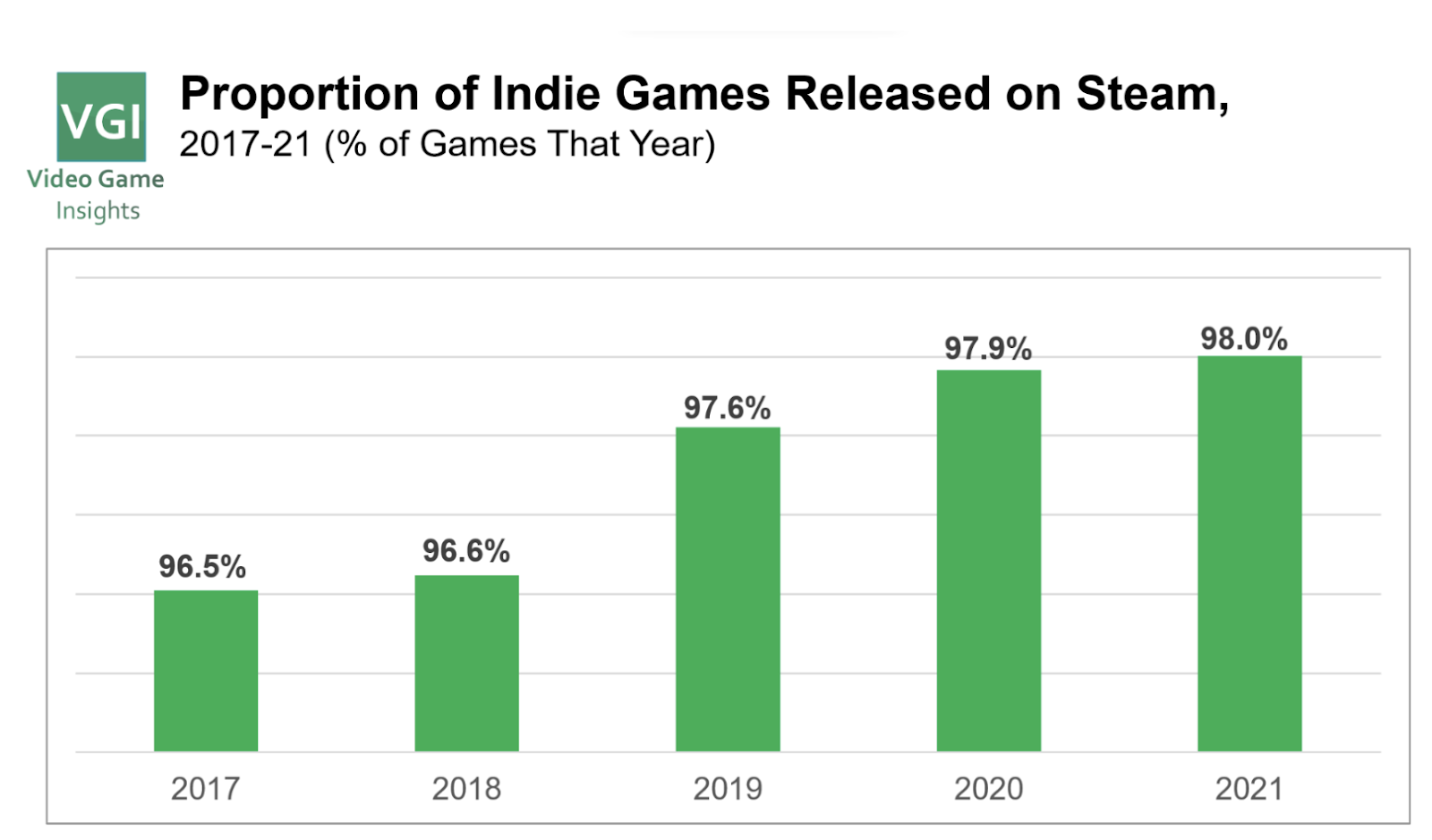
Last year, AAA titles made up less than 1% of crypto games, while indies made up over 90% of the total, per Game7 research. That ratio largely matches the broader gaming industry: Roughly 98% of Steam games are classified as indie.
Across both crypto gaming and the broader gaming industry, more releasing titles have been indie. This may be due to broader economic factors, including the waves of mass layoffs and studio shutdowns we’ve seen for years now across the gaming industry.
Mobile games also make up a large portion of the broader gaming pie, as 49% of games are mobile titles, according to data from analytics firm Adjust published last year.
I think there’s substantially less room for multiple “AAA-budget” games in the crypto space specifically because you’re competing with the likes of Call of Duty and Fortnite and require much higher levels of continued capital and revenue. Whether AAA crypto games want to admit it or not, they’re in the same bracket as multibillion-dollar giants like Microsoft and Epic Games when it comes to PC player choice. Call of Duty Black Ops Cold War, for example, released in 2020 and reportedly cost Activision $700 million to make.
Many typical gamers still aren’t going to get behind NFTs in video games, as we saw back in 2021 with smaller titles like the S.T.A.L.K.E.R. franchise. And we’ve seen this many times since with players’ mainly negative response to Ubisoft’s and Square Enix’s respective blockchain gaming endeavors.
Smaller games like mobile titles, however, aren’t at a major advantage. While 83% of mobile games are expected to fail, those lower-budget games come at a lower cost to studios.
The market has corrected to fit more realistic expectations — including expectations around funding. Can the crypto industry fund more than one AAA game at a time? I’m not sure.
Ronin is doing well in its niche, and Off The Grid is a rare breakout of a game for the blockchain gaming sector.
There’s definitely room for both to succeed — and I think they’ll continue to attract completely different types of gamers to their titles.